
Is Botanically Derived Disinfectant Actually Safer Than Bleach? An Honest Look
Jun 27, 2026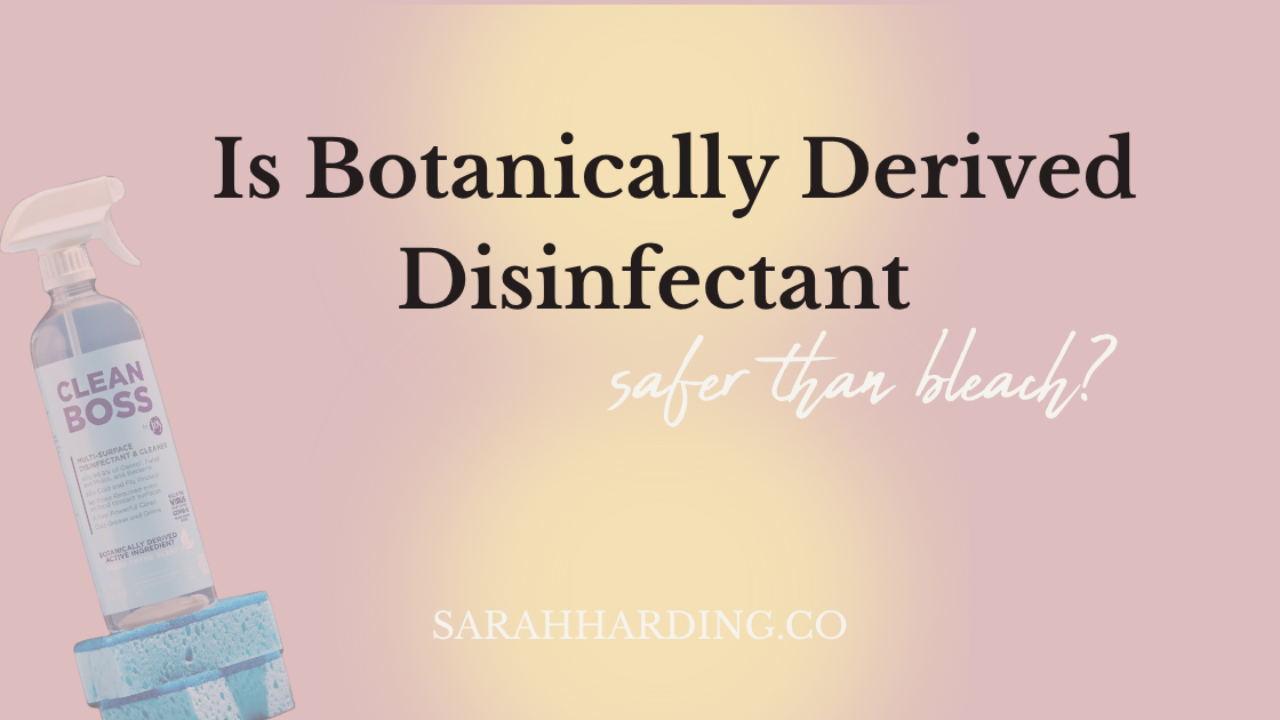
TLDR
Bleach disinfects, but only while it’s wet and on contact—and it releases fumes the whole time it’s working. If you’re cleaning around kids who breathe at counter height, that trade-off adds up. A botanically derived, EPA Registered disinfectant like CleanBoss kills 99.9% of germs using a plant-based active (thymol, from thyme), with no rinse step required. It’s not about fear—it’s about getting the same job done with fewer fumes in a house where small people are doing some of the cleaning. Here’s the honest comparison.
Does bleach actually disinfect better than plant-based cleaners?
Here’s the thing people get wrong about bleach: it works, but it’s needier than you remember. It has to stay wet on the surface for several minutes to actually disinfect, and the moment it dries or hits organic matter (a smear of jam, a little dirt), its power drops fast. Most of us spray and wipe in one motion—which means a lot of the time we’re not disinfecting at all. We’re just moving fumes around.
A botanically derived disinfectant works on a different active ingredient. CleanBoss uses thymol, a compound derived from thyme oil, that’s been recognized for its antimicrobial properties. It’s EPA Registered to kill 99.9% of germs—the registration is the part that matters, because “natural cleaner” with no registration is just a nice-smelling spray bottle making a wish.
What does “EPA Registered” actually mean (and why it’s not the same as “approved”)?
This is the distinction worth knowing. EPA Registered means the product went through the EPA’s review process for disinfectants and is legally permitted to make specific kill claims—the 99.9% number isn’t marketing, it’s documented. You’ll sometimes see products say “EPA approved,” which isn’t a real regulatory category for disinfectants. If a cleaner claims to kill germs and isn’t registered, that claim isn’t backed by anything.
So when you’re comparing a “natural” cleaner to bleach, the real question isn’t natural-vs-not. It’s: is it registered to make the claim it’s making? CleanBoss is. A lot of plant-based sprays on the shelf are not.
Is it safe to clean with kids in the house?
Let me reframe “safe,” because I’m careful with that word. Every cleaner has handling instructions, and I’m not going to tell you any product is consequence-free. What I can tell you is the practical difference in my house.
My kids have cleaned since they were four. Stools to the counter, spray bottle in two hands, very serious about it. With bleach, that meant fumes at their height, every time, plus the rinse step they’d inevitably skip. With a botanically derived spray that requires no rinse, the routine got simpler and the air got easier. That’s the honest version—not “this is perfectly safe and bleach is poison,” but “this fit a house where small people clean, and bleach never quite did.”
“This fit a house where small people clean, and bleach never quite did.”
What’s the no-rinse part about, and why does it matter?
Most disinfectants—bleach included—technically call for a rinse on food-contact surfaces. Nobody does it. We spray the high chair, wipe, and plop the toddler back down. A no-rinse formula is built for the way people actually clean: spray, wipe, done, no second step you were going to skip anyway. For counters, high chairs, and the surfaces tiny hands touch, that’s the feature that actually changes your daily reality.
How do you switch your cabinet over without overthinking it?
You don’t do it all at once. Start with the surfaces that matter most—kitchen counters, the high chair, bathroom handles, the spots that get touched constantly. Move the bleach to the garage for the jobs that genuinely need it (there are a few). Let the everyday cleaning shift to the botanical spray. One cabinet, one swap, no manifesto required.
The honest bottom line
This isn’t a “bleach is evil” post. Bleach has its place. But if you’re cleaning around kids—especially kids who help—a botanically derived, EPA Registered disinfectant gets the same 99.9% done with fewer fumes and one less step. That’s not fear. That’s just a better fit for a real house.
Frequently asked
Is botanically derived disinfectant as effective as bleach?
For everyday germs, an EPA Registered botanical disinfectant kills 99.9%—the same headline claim as bleach—using a plant-based active. The registration is what backs the claim. Bleach still has specific heavy-duty uses, but for daily surfaces, the botanical option does the job.
What is thymol and is it actually antimicrobial?
Thymol is a compound derived from thyme oil, recognized for antimicrobial properties and used as the active ingredient in some EPA Registered disinfectants, including CleanBoss.
Does CleanBoss really not need a rinse?
Correct—it’s formulated as a no-rinse disinfectant, which is the practical advantage for counters and high chairs where the rinse step usually gets skipped.
Is “EPA Registered” the same as “EPA approved”?
No. “EPA Registered” is the real regulatory status that lets a disinfectant make documented kill claims. “EPA approved” isn’t an official category for these products.
What does the promo code TSHCO do?
It applies a discount at checkout on CleanBoss products.
CleanBoss Multi-Surface Disinfectant
Botanically derived, EPA Registered, no rinse required. Code TSHCO takes 15% off at checkout.
Shop CleanBoss →This post contains my affiliate link. At no additional cost to you, I may earn a commission from your purchase. I only mention products I actually use.
